Procrastination is a common enemy for every student. For some, it is a constant uphill battle. For others, it is an uncommon foe. Even authoring this article about procrastination was procrastinated for three weeks and a day to be exact. Even though I looked forward to this article, and had an idea for what I wanted to write, the act of doing so was put off until I remembered to work on it.
Why do we procrastinate?
Procrastination is a result of three major things you may not be aware of.
One reason is the fear of failure that comes with a potential outcome. They will put off an assignment or task until not doing it results in a definite failure rather than a potential one. Have you ever put off a project that you did not know how to do, only to rush it at the last second to avoid a zero? That is the fear of failure at work in your procrastination habits.
A second reason is anxiety. Feeling anxious about an exam can lead to people wanting to delay it, so they can have more time to study. Similarly, delaying homework and other work-like projects could be because one might be afraid of the outcome. This reason often coincides with overthinking the steps and guidelines of an assignment, or undervaluing one’s ability to complete the assignment “right.”
The last reason is repeated justification. Have you ever justified procrastinating because there were no consequences the last time you did it? Maybe the stress of doing something last minute made it “easier” to do the task. Whichever one applies to you, the outcome is the same. We use those moments where the outcome of procrastination is not negative to further justify why we can, or should, procrastinate. Even when the outcome is negative, say getting a zero on an assignment for not handing it in on time, we justify procrastinating again because “it only happened once” or “we can make up the points, so it’s not that bad.”
How do we experience procrastination?
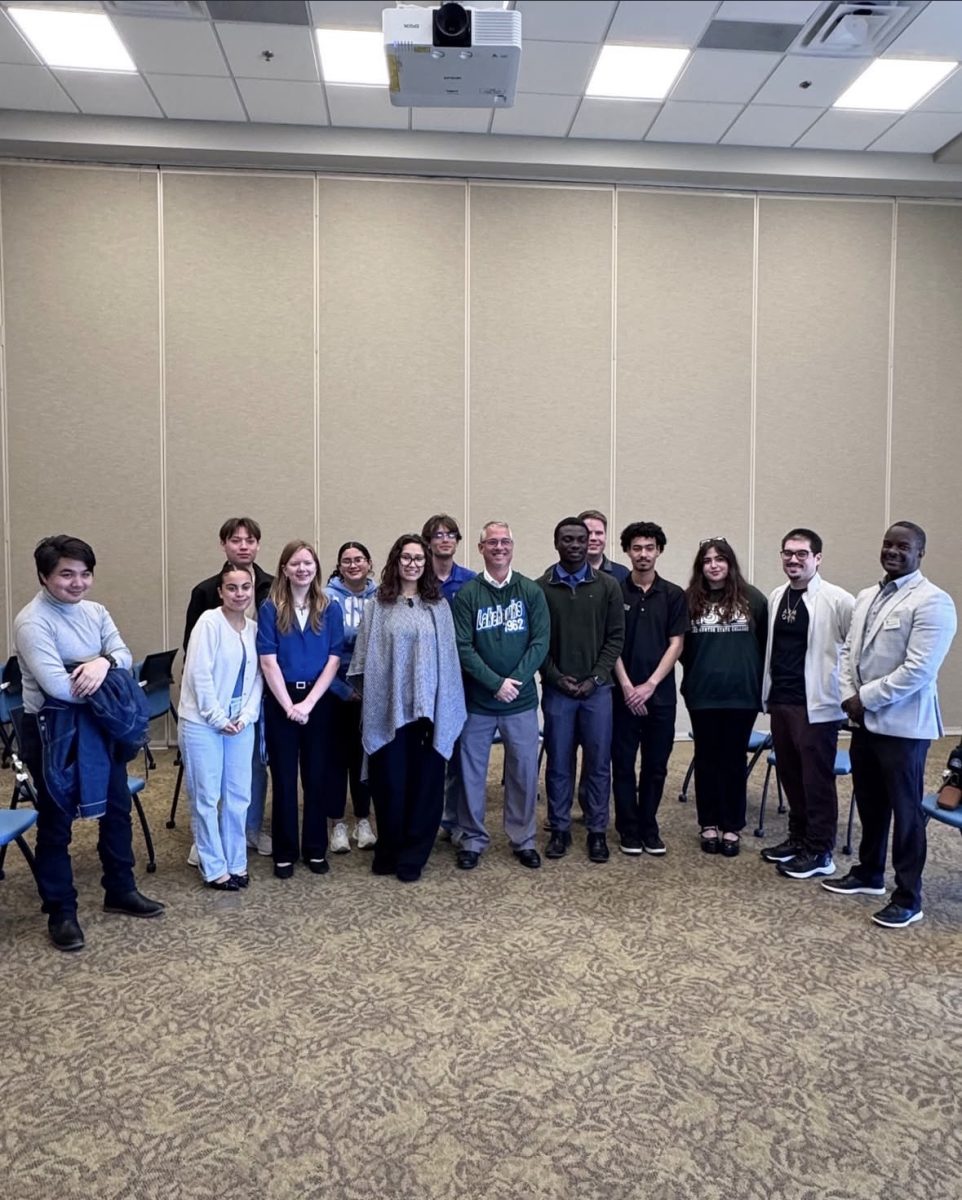
I was lucky enough to have the opportunity to interview Talafia English at the 66th annual Florida College System Publications Association (FCSPA) about her procrastination habits. She spoke about how perfectionism shaped her life from 3rd grade to junior year in high school, stating she “never did homework” and “got by on exams.” The reason for this was because “when [she] is in a moment where [she] can do a project or paper” at an early time, she feels it “won’t be [her] best work.” She also empathized with me when the topic of “gifted kid burnout” was brought up. Talafia was an honors student, and she reflected on a moment in the 7th grade where her honors teacher “berated the class” for having low scores, saying they’re “supposed to be better than the normal kids.”
This, of course, had a negative impact on Talafia’s outlook on her work. We both agreed that doing our best work doesn’t equate to getting a good score, and being shot down when we put our best foot forward can decrease our willingness to try again. Her procrastination habits were the result of high-expectations from both herself and the people around her, be it her own perfectionism or a 7th grade teacher with high expectations of their class.
After we discussed our procrastination habits, the topic of how to stop procrastinating came up. Talafia compared it to a “gambling addiction” to which I agreed, having personally gone through the journey of putting a stop to my procrastination habits. I stated that our bodies are used to the stress of doing everything at the last minute, so not doing them at the last minute causes panic. This was a sentiment also shared by Talafia who, when asked about how her procrastination habits affected her youth, she responded by saying she needed “to do some self reflection” in her junior year of high school.
What can we do to resolve our habits?
Resolving procrastination habits won’t be easy, but it is possible! Personally, I found that making a checklist helps me keep track of what I have and have-not done. I’m the type to panic when I can’t remember if I did a chore or assignment, so a checklist eases that worry. As for actually doing the task, working in a different environment, like a living room or library, boosts my productivity.
While in those spaces, I also used a pomodoro timer from YouTube, a personal favorite of mine is the Minecraft 25/5 Pomodoro Timer where you focus on work for 25 minutes, then take a 5 minute break. The pattern repeats a few more times depending on how long it takes to finish the task, or if the video is on loop. Either way, having a timer helped me dedicate the time to my work/chores. Apps such as Focus Friend by well-known YouTuber and author Hank Green are made with these struggles in mind, as well as timers and lists as stated before.
There are many ways to approach changing your procrastination habits, from online help to a change of scenery. These habits are hard to break, but as someone who managed to make it to the other side, every moment spent towards creating a healthy relationship with work is worth it.
___
For more information or news tips, or if you see an error in this story or have any compliments or concerns, contact [email protected]