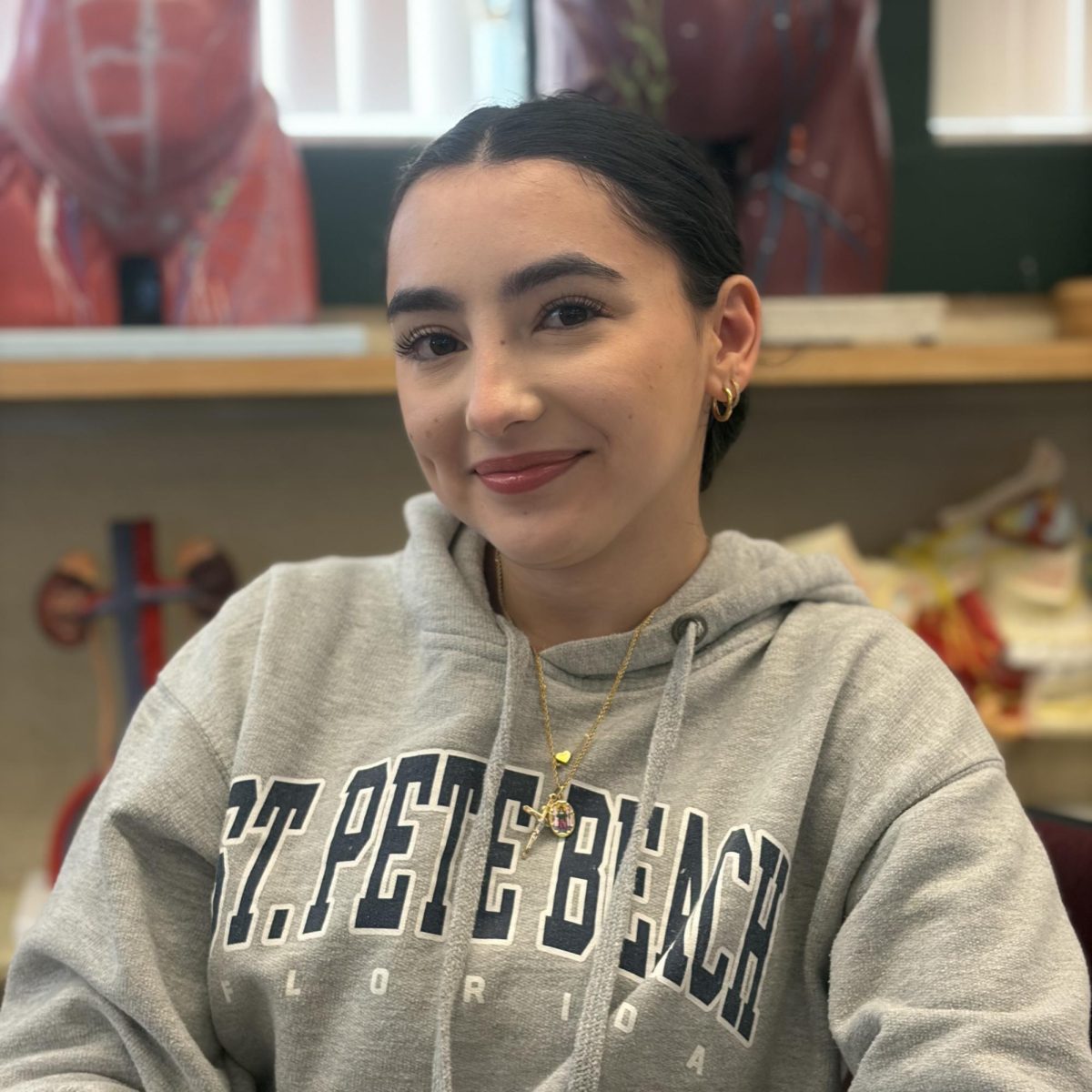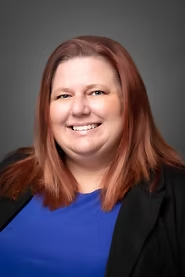
In this student spotlight, Lindsay Lancaster talks about the origins of her passion for respiratory care, why she believes respiratory care therapists are underrated, and her experience as both a student of LSSC’s Respiratory Care program and the treasurer for LSSC’s Respiratory Care Club as well.
Lancaster’s Passion for Respiratory Care

Lancaster shared that her inquisitive interest in respiratory care was influenced through her personal experiences of witnessing her family members requiring a respiratory therapist.
“My aunt, when I was eighteen–a senior in high school–battled lung cancer. I saw her direct care with respiratory therapists, and her battle with a respiratory illness. I’m also a mother, I have two children…When my daughter was born, she required some respiratory attention. It [Lancaster’s aforementioned personal experiences] kind of sparked my curiosity because respiratory therapists are kind of unseen in healthcare until you need one, and hopefully you don’t need one. I didn’t know a lot about respiratory therapists until my daughter needed respiratory therapists.”
The events caused Lancaster to receive a better understanding of what respiratory therapists do. These procedures include breathing treatments ranging from life support to intubation for bedside patients in basic or critical care. Lancaster revealed that as a respiratory care student, she has partaken in these procedures during her clinicals.
“I’m passionate about patient and bedside care, and this [respiratory care] is direct bedside care, where I can care for my patients in their first breath and potentially their last breath knowing that we [her and respiratory therapists] did all that we could, and I had a hand in either helping them or facilitating those last breaths.”
Why Is Respiratory Care Underrated?
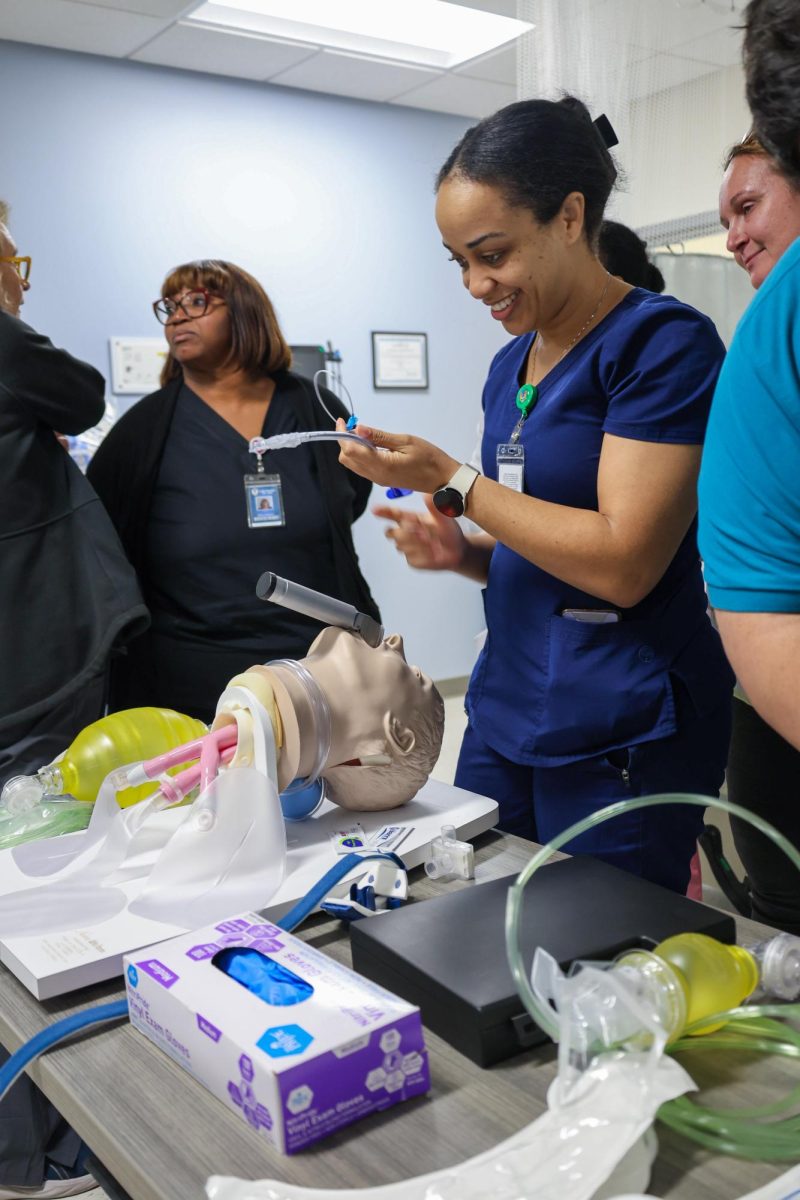
Lancaster mentioned that she believes respiratory care is an underrated profession and that not a lot of people know about it. She explained that while most people visit a doctor for annual checkups, people diagnosed with a respiratory disease are usually the only ones that know about respiratory therapists.
“A lot of people see doctors, nurses, and CMAs (certified medical assistants), but you don’t really see respiratory therapists. We [respiratory therapists] are kind of like the ‘Batman’ of the hospital. We’re called when we’re needed, and then we leave. We kind of come in, save the day, do our thing, stabilize our patients, and then move on to the next [patient]. If you need one [a respiratory therapist], you know what they do. If you happen to not need one, you never know what a respiratory therapist does. Even [me] being in the program, and pursuing my career in respiratory therapy, a lot of my friends and family don’t know what a respiratory therapist does…Unless you need one, and you already are in those critical situations, or even need breathing treatments in the hospital, you don’t really see respiratory therapists. That’s kind of why it [respiratory care] is unseen, and why not a lot of people know [about it].”
Then, Lancaster explained how respiratory therapists help a person suffering from a respiratory disease.
“We [respiratory therapists] can help manage breathing exercises that make your lungs function better. [If] you come in with pneumonia or atelectasis–a collapsed lung, you need recruitment maneuvers that we would teach you, and you kind of get with the respiratory therapist. It’s scary having the feeling of your breath being taken away, not being able to catch your breath, or not oxygenating well. So, when you’re put in those positions, and you have someone who understands and can help you see your way out of it medically, [that’s] the position of a respiratory therapist. I’ve heard a lot of families getting a new appreciation [for respiratory therapists] like me with my daughter. I had a whole new outlook on the field of respiratory therapy.”
The Respiratory Care Program and Respiratory Care Club
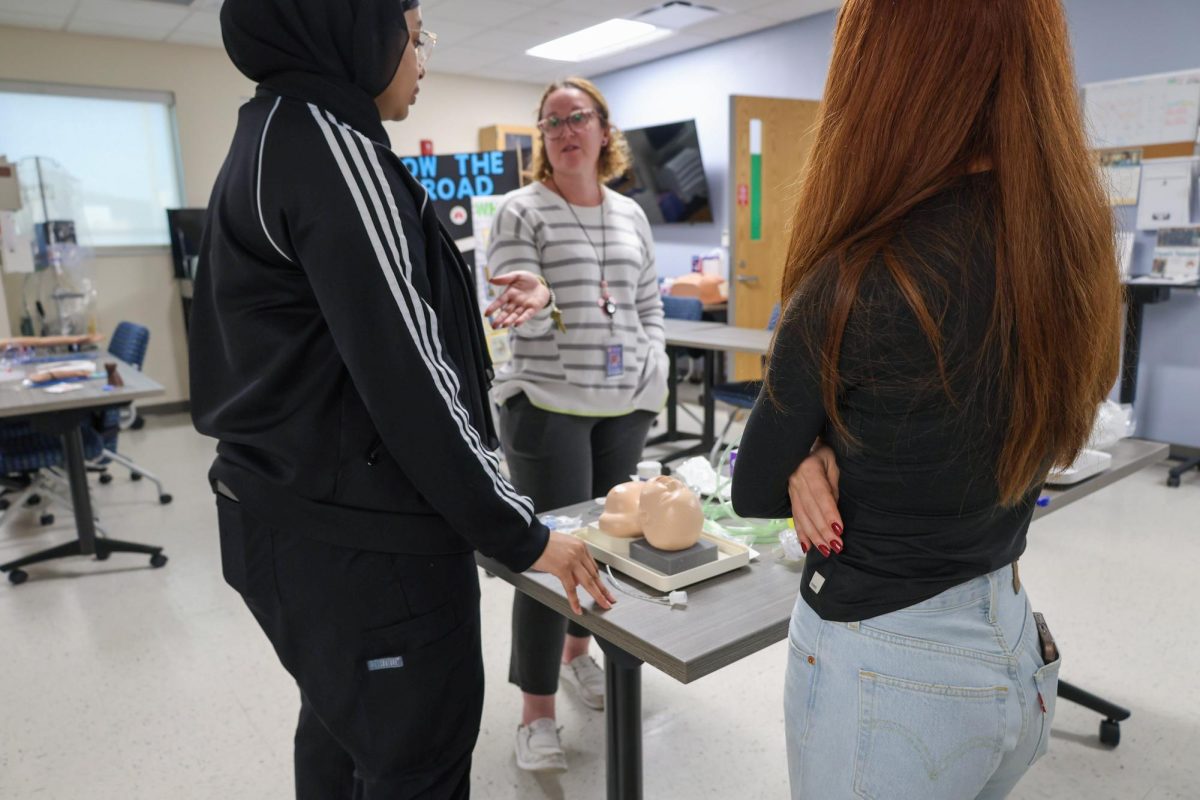
Lancaster described her experience as a student in the Respiratory Care program as “very eye opening.”
“[Being a student in the Respiratory Care program is] very eye opening. We [her and other respiratory care students] started with floor therapy, which is generally [dealing with] sick patients, [who have] asthma [or] COPD (cardiopulmonary disease). They need a general breathing treatment, which is relatively easy to give, and the patient feels better after. But then we move to ICU (intensive care unit), and these patients are very, very sick. They’re on life support. They’re managed by the vent. This vent is keeping them alive. Their airway in that tube is critical for them maintaining life. So, it’s been very insightful to see the hand that respiratory therapists have on critical patient care, and how I would appreciate it if I was in those positions–my respiratory therapist and the work that they do in managing that tube, the airway, [and] the ventilator that I’m breathing on. It’s been giving me a new appreciation for life itself because these patients are very ill, and we see patients from their first breath too sometimes and unfortunately their last breath. But at the end of the day, I know I’m doing it [respiratory treatments] with dignity and respect for all of my patients. Like I said, I’m passionate about patient care. Even if it’s a terminal extubation, I’m doing it with love, gentleness, and passion.”
As a respiratory care student, Lancaster attends class lectures, and also participates in clinicals.
“Right now, we [her and other respiratory care students] are doing chest medicine for our lecture class. We’re learning about these comorbidities that our patients are experiencing, and why they might be on a ventilator, or why they might need respiratory care. Then, I’m going to clinical rotations at local hospitals in the area, and I’m seeing patients on the ventilator that need breathing treatments, recruitment maneuvers, [or] go into full cardiac arrest or ‘code blue.’ That [‘code blue’] is one thing that respiratory therapists run to every single time because the patient’s heart [and] breathing has stopped, and our first priority is to manage that airway and hopefully bring that patient back [to life]. So, it’s been very insightful to see and have the hands-on experience [of] dealing with these critical patients.”
Lancaster stated that the Respiratory Care program would help students who are interested in joining the medical field by bringing awareness to respiratory care and the medical field itself.
“Just awareness, most people don’t know what respiratory therapists do. Most people don’t realize that there are options for being in the hospital bedside [care] without being a nurse, which nurses have a very broad expectation of…They have a very broad range of things that they deal with in bedside patient care, and they’re kind of like the doctor’s right-hand man or woman. We [respiratory therapists] are more specialized to the cardiopulmonary system. What is the workload of the heart? What is the workload of the lungs? So, I think this program through Lake-Sumter will hopefully bring awareness to other options in being [part of] hospital bedside [care].”
Lancaster believes that her instructors have really helped her learn about respiratory care.
“I think our instructors are amazing. Ms. Lovelady and Ms. Kowalski have really built a foundation for us [her and other respiratory care students] to go into the hospitals, and understand what we’re looking at…They really have prepared us for being in these clinical situations. Really, we owe it all to them because without them laying that foundation and putting those ‘book pieces’ together for us, we would go in there [hospitals] blindly, and that’s dangerous for us, for the patients, and the families wouldn’t be happy about that. They’ve really set a good foundation in preparing us in the way that the [Respiratory Care] program is set up. That’s why we’re in ICU for [our] third semester versus [our] first semester [of the Respiratory Care program]. Could you imagine if we went in with no knowledge of ICU and they expected us to know what we’re looking at? We did [a] mechanical ventilation class before we went to ICU, so that we could understand what we were looking at.”
As the Respiratory Care Club’s treasurer, Lancaster hopes that the club will help promote the Respiratory Care program, alongside informing others about respiratory care’s importance.
“We [her and the club’s members] are hoping to kind of promote the [Respiratory Care] program because it is a new program here at Lake-Sumter and generally in this tri-county area…[We want to] hopefully do some fundraising, so that we can go on summer forum trips, which is a big respiratory [care] convention, [which is] very educational [and] very beneficial for our students, and really just bring awareness to respiratory care.”
Advice for Students
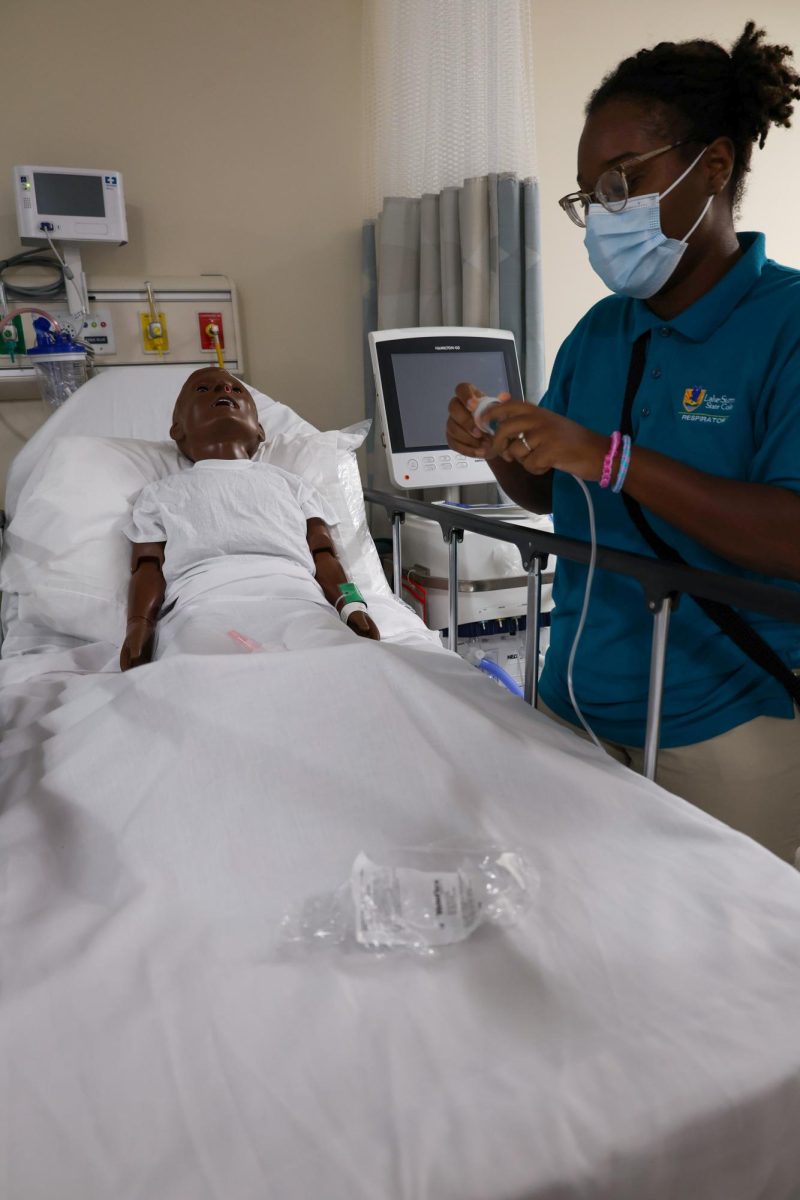
Lancaster’s advice for students (specifically those pursuing respiratory care) is to confidently and passionately focus on their course’s lectures and assignments.
“Just take it [coursework] in chunks. It can be overwhelming. It can feel like a lot, but it’s very rewarding at the end of the day. You’ve got to have passion…and you have to keep an open mind…You really have to maintain composure…and just trust yourself. They [instructors] are teaching you everything you need to learn here [at LSSC], and they’re good at it…So, go in confident, [and] go in ready to learn because you’ll always be learning…just one day at a time, keep your head down, do your coursework, study, and just be open-minded and passionate about it.”
The Angler will make certain to continue documenting any of the Respiratory Care Club’s upcoming open houses in the future.
___
For more information or news tips, or if you see an error in this story or have any compliments or concerns, contact [email protected]