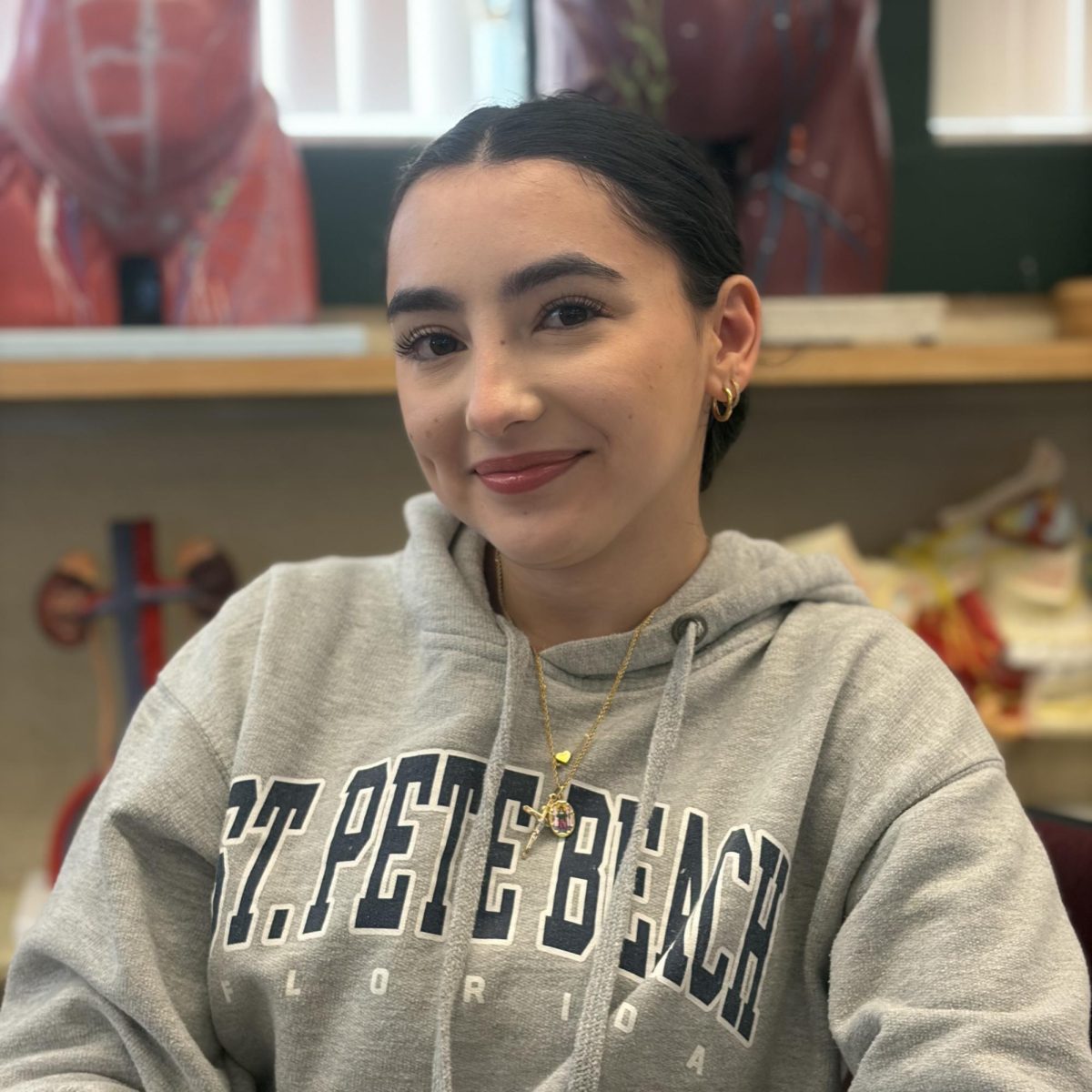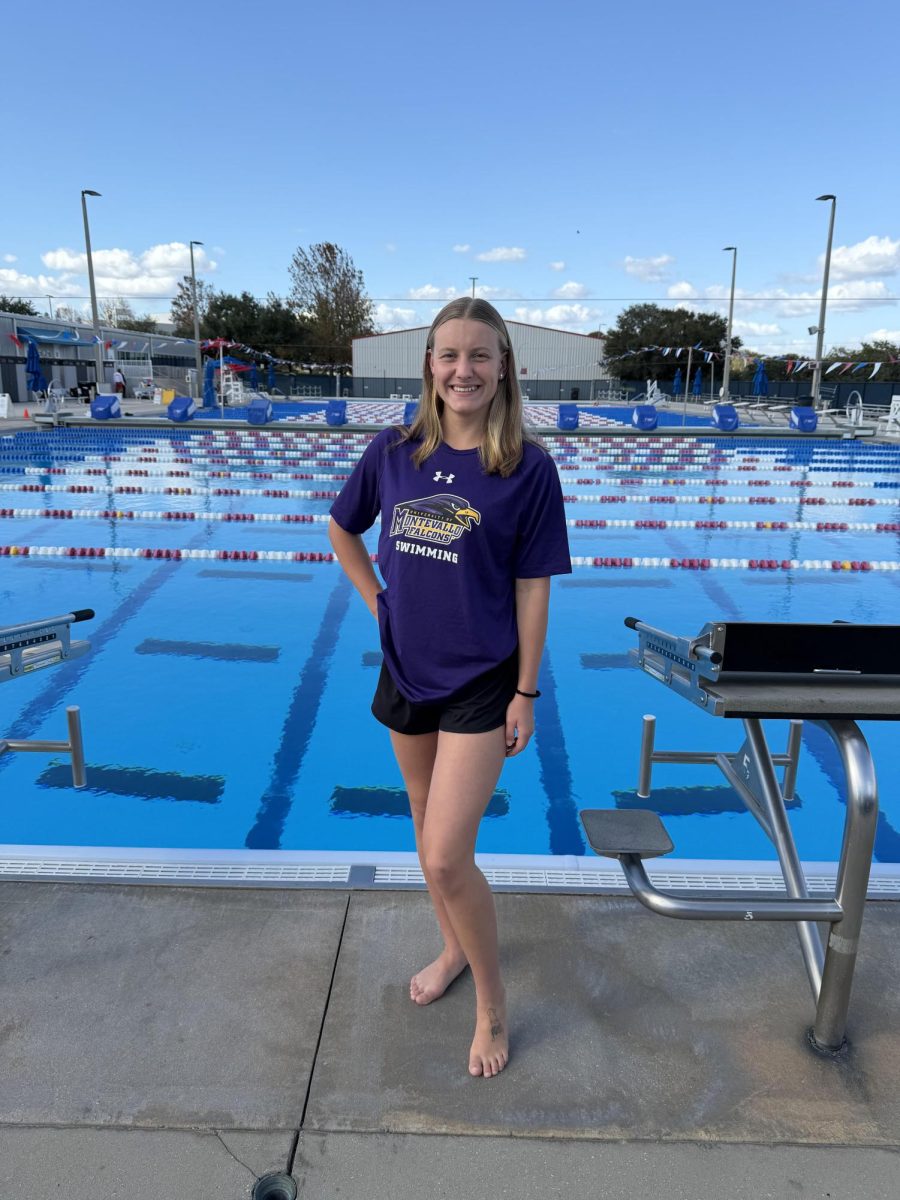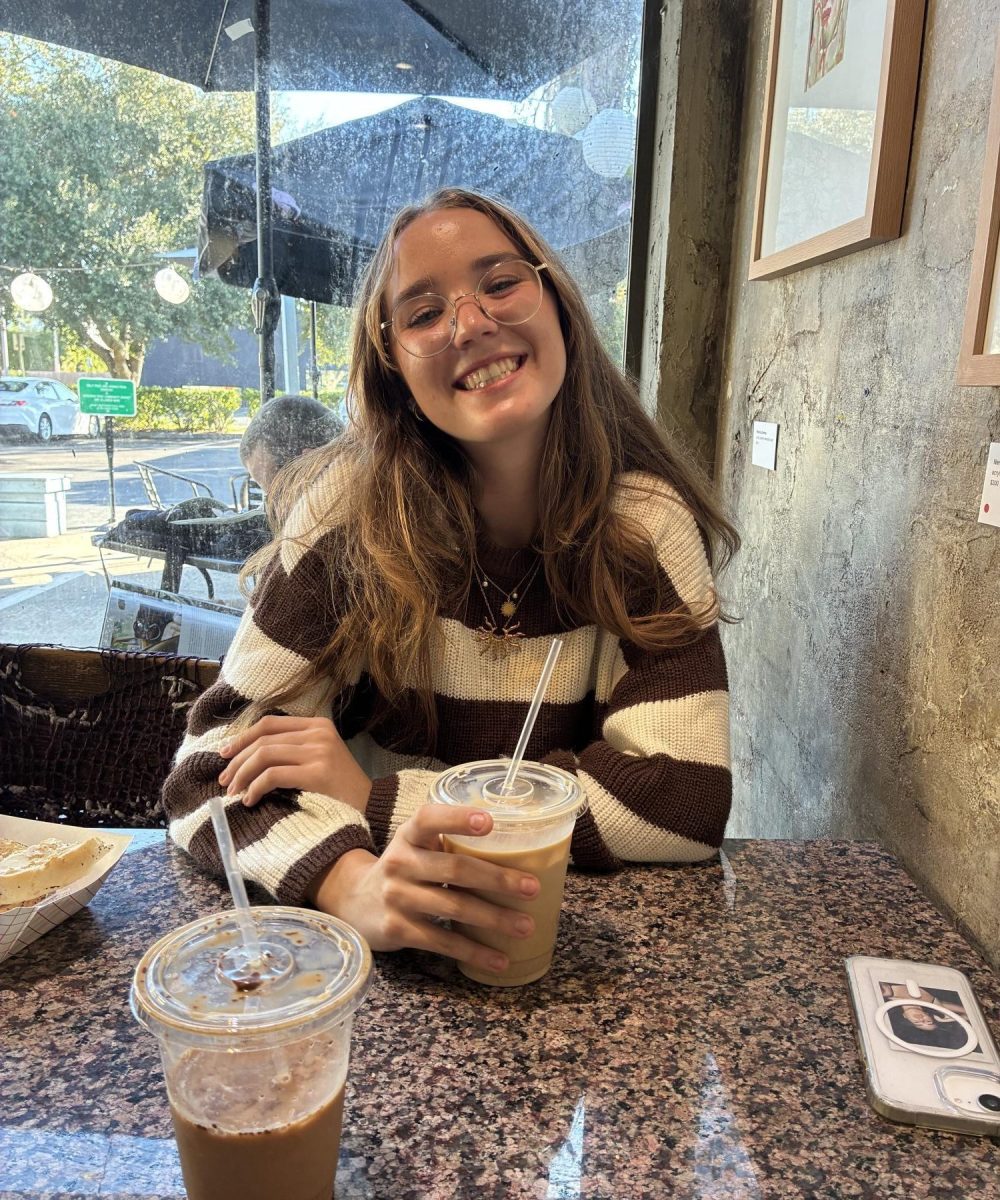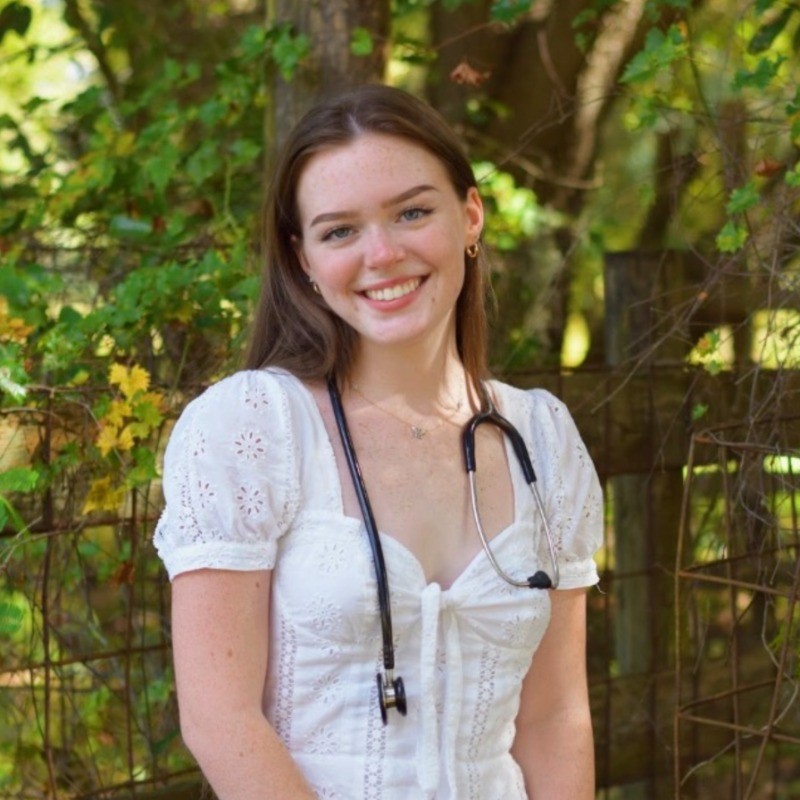
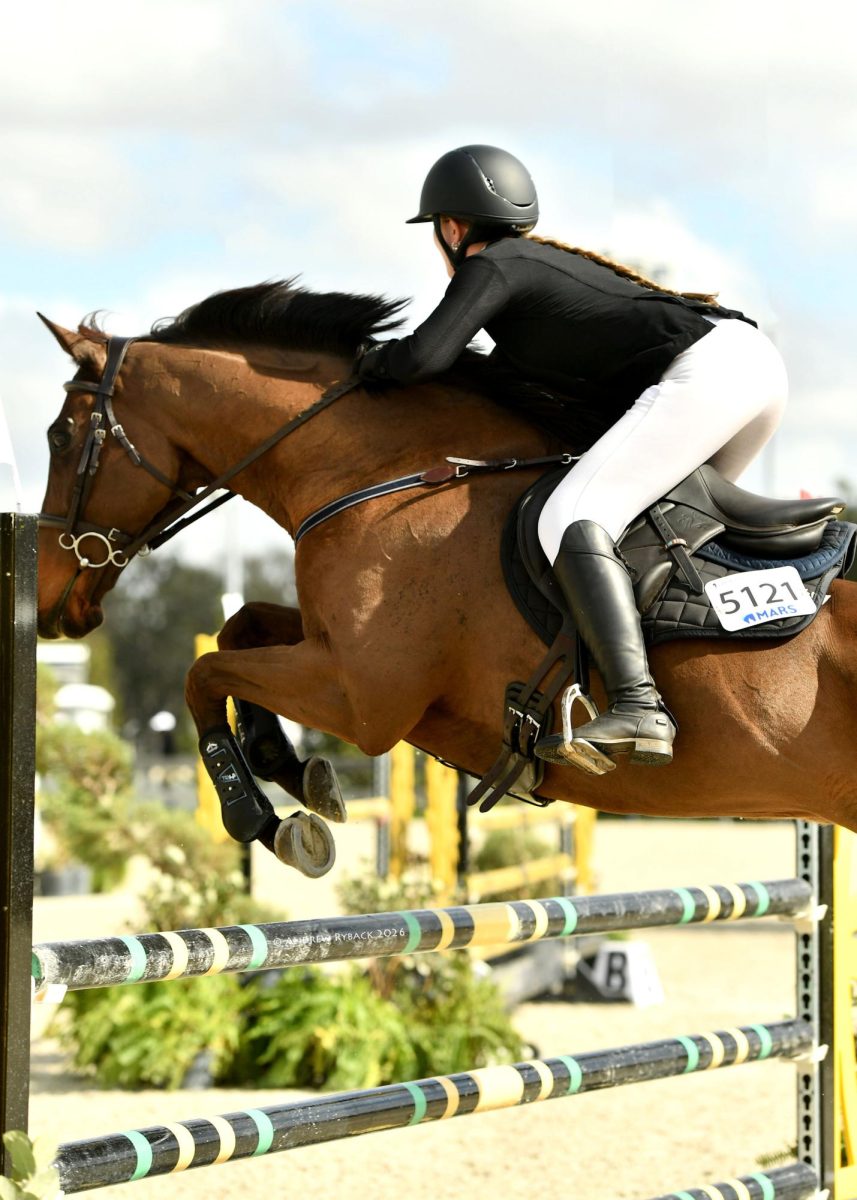
In this student spotlight, Katherine McGaffick speaks about her plans to major in English, her experience as an employee for LSSC’s enrollment service department, and her journey as an equestrian.
Majoring in English
McGaffick has been a student at LSSC since Aug. 2024. As a sophomore, she is currently completing her associate’s degree. She plans on majoring in English, once she graduates from LSSC this semester.
“I’ll be graduating with my associate’s degree in May…Right now, my thinking is more so towards English as a general major…as kind of an ‘umbrella’ major for myself.”
McGaffick explained that one of the advantages of having an English major is that it can be applied to various career fields. She mentioned that she is specifically interested in possibly pursuing a career in technical writing.
“My thinking with having English as a major is mainly because it’s very applicable to a lot of different fields. I can’t say for certain whether I’m thinking [of] going the higher education route. For a while, I was thinking, ‘Maybe [I’ll] become a professor, get my master’s degree, [and] kind of go from there’…But publishing, editing, [and] other sort of technical career fields–any sort of management work with that–kind of appeals to me. For now, I’m not too sure, but it’ll come together eventually.”
Working for Enrollment Services
McGaffick works as a student employee in the Enrollment Service Center at LSSC’s South Lake campus. She helps students with handling their enrollment applications, registering for their classes, and connecting them with both academic advisors and financial aid specialists.
“A lot of my job involves communicating with students…We [her and her co-workers] send out emails to students congratulating them on their acceptance [to the college], and helping them get started with their enrollment…We also help students with their Florida residencies for in-state tuition…We help remind students and tell them what we need from them. From a face-to-face aspect, a lot of what we do is helping students with financial aid and advising. Although we are not part of advising or financial aid, we help get them in contact with anyone from those departments.”
McGaffick described her and her co-workers as being a “first introduction for students,” who are either returning or starting a semester for the first time. Therefore, she tries to provide a welcoming atmosphere to students by displaying kindness and empathizing with their needs.
“I try to encourage them [students] to feel free to bring up a concern or a question–not feel like someone is pressuring them or anything like that…[I try] helping people feel welcomed when they step in…Greeting people [and] being friendly, that all helps people to feel more comfortable with speaking with us [her and her co-workers]. Also, we have so many first-time in college students…it’s fully understandable if you [students] aren’t sure what to do, or you don’t know where to find something or what to do. So, helping to encourage those students to feel comfortable as they get settled into college, that’s usually a big thing [priority] since we have some students who come in [and] who aren’t too sure about their next steps.”
McGaffick has other part-time jobs, and is a full-time student as well. In order to prevent overwhelming herself, she tries chiefly prioritizing her college assignments, which physically and mentally helps her to balance out the rest of her duties.
“I try to prioritize my school[work]. It’s really difficult sometimes to do that when you have a lot of different responsibilities spread out across a handful of different things that you’re trying to deal with. But if I’m able to prioritize my coursework, and I just keep that as the number one thing [priority], I feel a little bit less overwhelmed…Obviously, this [completing my associate’s degree] has been something I’ve been working towards for almost two years now. And I plan to go and get my bachelor’s degree and go from there. This is obviously a lifelong, career building thing–trying to get my associate’s degree and bachelor’s. So, keeping that in mind, trying to remember, ‘Hey, this is really, really important,’ helps me compartmentalize all the different things that I’m trying to do all at once.”
McGaffick’s Journey As an Equestrian
McGaffick is an equestrian. She has been riding horses ever since she was eight years old. Although she participates in equestrian competitions, she also enjoys spending time with her personal horse for fun.
“With my personal horse…since he’s not actively competing right now, I can have a little more fun with that [horseback riding for fun–not competitively]. I like to trail ride here and there, just have fun riding instead of having it all be competitive, training, strength building, and all of that. So, that is kind of what I could consider my hobby on the side is: just having fun with my personal horse, and then also horse showing on the weekends–that’s obviously something I love to do.”
McGaffick revealed that her origins as an equestrian began when she rode a pony as a kid at a festival.
“I went to some little festival that had pony rides, and I guess [I] enjoyed that [horseback riding]…My parents asked me, “Hey, your friend rides horses. Do you want to go to a [horseback riding] camp?” And I was like, “Sure.” I didn’t really think too much of it because I was big into ballet at that time–which I did for six years. But once I started [horseback] riding, I didn’t really care about that [ballet] anymore.”
After attending a horseback riding camp, McGaffick began taking horseback riding lessons. Throughout the process, she rode with her friend, her mother, and eventually met her current personal horse named Bentley in Dec. 2019.
“I started taking [horseback riding] lessons at a barn just out in Groveland. I rode with my friend for a little while–that turned into weekly lessons. From there, my mom actually started riding. My mom has been riding for the same amount of time that I have, which I think is really cool. We have ridden together, which is great. So, having a supportive family has also helped out a lot. But from there, I moved barns with my trainer that I had started under at my first barn, and she started a [horseback riding] lesson program. I stayed there for a while and then was kind of riding a little more casually. [I] did a couple of horse shows here and there, [and] leased a couple of her horses–just half-leases. Eventually, we [her and her family] had been trying [to find] horses here and there for purchase, but we did find–he’s now my personal horse–Bentley…From there, I was able to get a lot more competitive, [and I] started joining the A Circuit with him–he’s twenty now, so he’s a little bit older. Then, I kind of died down from the sport for a little while around my senior year of high school. Since my horse was older, I didn’t really have anything to sort of move up on.”
However, in Mar. 2025, McGaffick was allowed the opportunity to half lease a horse. Riding with this horse caused her passion for horseback riding to return.
“It’s been really cool getting back into the sport [horseback riding], and being even more competitive. I started when I was really young, didn’t love it at first, but then within a couple months I was like, ‘This is all I ever want to do for the rest of my life.’”
When asked if she would like horseback riding to either be a lifelong career or hobby, McGaffick gave a very insightful response.
“It [horseback riding as either a lifelong career or hobby] is a common sort of debate amongst equestrians within their own personal careers…It is a really expensive sport, which is why I work so much to afford it…And there’s a lot of difficulties for people in the industry–as there is for any sport really–but there is that kind of ‘fine line’ between, ‘Do I want to do something that I’m really passionate about, or do I want to go and do something that is going to be super stable for the rest of my life?’ So, I really love riding, and if I could make it my career, then [I] totally [would]. But I’m just not really in the position for me to step out, go, and claim myself as a professional [equestrian], and then start my own [sales and training] program. There are people who do that, and it can work out for them, but I’m just not really in that point where I want to go that route. Plus, there’s a lot that goes on–not so much riding and training horses hands-on–but everything that goes on ‘behind the scenes’ where you do need someone who is really good at marketing, editing, and that kind of thing. [It’s] still working in the equestrian field, but not so much [of], ‘I own a barn, I have horse[back riding] lessons, and I run a [horseback riding] program.’ So, there’s kind of a ‘line’ between that. But something that would allow me to incorporate that side of my life in what I do professionally–what I end up getting my degree in–would be ideal.”
McGaffick shared that one of the appeals of horses for her (when compared to other animals) is their communication with humans.
“I think with horses, first of all, they’re huge…This animal is so big and yet it’s so kind. It’s not trying to bite me [or] kill me. Yes, there are horses who bite, but horses are naturally prey animals. They are oftentimes kind of misunderstood by people who aren’t comfortable around horses because they look at them and they go, ‘Horses can bite and they can kick!’ Yes, that’s true, but they only do that when they’re threatened in some way. So, I think that’s a really cool kind of aspect of horses is [that] they are also really good at communicating. They’re very expressive with their faces [and] their ears. After a while, I think that the big thing [appeal] is communication with them. When you’re around horses for a long time, you start to be able to really pick up on their body language–that’s what we [equestrians] call it…Someone might ask you, ‘Well, how do you know that horse is happy?’ or, ’How do you know that horse is in pain?’ Someone might not be able to discern between the two [feelings], but when you’re around them for a long enough time, you can see exactly how they’re trying to communicate with you. That’s really cool! Yes, you [can] get that with other animals, but horses are very expressive and they’re very honest. They’ll always express to you how they feel. So, I think that’s really cool–the communication aspect of it.”
McGaffick also stated that a horse’s communication with humans is also one of the appeals of horseback riding as a competitive sport, but as a fun hobby as well.
“You and your horse are the team…That’s a really cool thing: to step in the ring, and it’s just you and your horse. Obviously, it’s not another person. There’s no verbal communication happening at all. Everything that you’re telling that horse is based on your physical cues that you give [to] the horse. So, there’s that appeal to it…Also, anyone can ride a horse. It doesn’t matter where you come from, [and] it doesn’t matter who you are as a person. There are different therapies that are used for people with physical limitations to help them…Anyone can be around horses and can partake in the sport. That’s why a lot of people love it. You can be someone who’s never been around a horse, and you can go take a [horseback riding] lesson. That’s a really cool aspect of it. In just about every sport you do, there’s communication with other people. With this, it’s literally an animal. So, everything that you’re working with is with something that you cannot talk to. Everything that they pick up on is based on your attitude and literally how you’re feeling–horses can pick up on that. They definitely pick up on the physical sort of communication that comes from that too.”
McGaffick believes that since horses are good at communicating with humans, she mentioned that forming a bond with them is another aspect people find appealing about horses.
“I think that a lot of people do like that there’s sort of a connection that can be made [between a horse and its rider]. Sometimes, in the sport [horseback riding], it can be difficult when you’re dealing with a lot of different horses…But when you’re able to [bond with a horse], it is definitely an appealing factor when you own a horse for a really long time. Having my horse for over six years now has been great. So, there is that aspect of: yes, you form a bond with the horse…There are certain horses who you might not particularly get along with, and that’s okay. They all have their own different personalities. But when you find that bond with a horse, it’s a really cool feeling to be able to really understand that horse, and just go out and have a good ride, or [have a] fun time going out with [it] in any aspect.”
McGaffick said that one of her proudest accomplishments as an equestrian is taking care of her horse, Bentley.
“I’ve had a couple [of proud accomplishments]. I think a big thing [accomplishment] is having my horse, who I’ve been able to kind of help develop as he’s gotten older. When I bought him, he was not as quiet as he is now…He was what we [equestrians] consider a very ‘hot’ horse–he just had a lot of energy. He was a little bit stressed out when we got him. We also use the term ‘blown up.’ We use that for thoroughbreds that come off the [equestrian racing] track. He’s not a thoroughbred, but he was kind of blown up in that aspect–he wasn’t the easiest to deal with or to ride. I had a couple issues in the months that followed. I also wasn’t a very educated rider. I was thirteen when I got him. So, I did not have the tools that I needed to really make a lot of things work. I did have some great trainers who eventually stepped in with him, and really taught me how to train and manage that [Bentley’s stress]. But seeing him develop into a horse–into the horse that he is now–he’s a very different ride. I never thought I would have been able to take that horse out of the jumpers, and then put him in the hunter ring, and have him go around really happy, content, and very quiet. Same thing with him and his jumping as well–that definitely improved a lot. That’s a big accomplishment: being able to have a horse that you’ve spent a lot of time and a lot of energy and effort developing to now anyone can get on that horse, and they use him for beginner lessons. He’s totally quiet and very safe [to ride on].”
Advice for Students
McGaffick advises students to pace themselves, to understand that they are still learning about life as college students, and to follow their goals.
“Learning how to pace yourself and understanding that you’re not going to know everything right away is a big one [tip]. Also, [for] students coming in [to college] for the first time, you might not always know what you’re going to do in the future, and you don’t have to…You’re also never too late to come back to college or to start. If you have a goal or something that you want to achieve–even if it seems really vague–still go for it. Don’t sweat it if it seems too big.”
McGaffick graduates from LSSC with her associate’s degree this semester. After graduating, she plans on attending the University of Central Florida to major in English with a concentration in either technical writing or literature.
___
For more information or news tips, or if you see an error in this story or have any compliments or concerns, contact [email protected]